A Review of Emma Cline’s The Guest

A Review of Emma Cline’s The Guest

By: Sariya Camp

Over the past year, I have come across countless glowing reviews of The Guest by Emma Cline. But it wasn’t until a fellow writer recommended it to me that I finally decided to pick up a  copy from my local library. Within the first few pages, I was utterly bewitched by Cline’s writing, which pulled me from the reading slump I had recently fallen into. The combination of  lean, tense prose, an unsettling atmosphere, and an antiheroic protagonist was the perfect recipe  for a late summer page-turner. Indeed, The Guest is masterfully defiant of genre, functioning as  both a fast-paced thriller and a work of literary fiction with a great deal to say on the subjects of  class, identity, and gender power dynamics. It’s impossible to put down.  

Cline’s The Guest follows a week in the life of Alex, an aimless young woman who has just been turned out by her boyfriend Simon, a rich older man she’d lived with during the summer at his house on Long Island. Over the next six days, Alex drifts between pools and private beach clubs, worming her way into the homes of strangers, and biding her time before  she can reunite with Simon at his Labor Day Party. Heedless of the destruction she leaves in her wake, Alex is all the while running not only from her own uncertain identity, but also Dom, a dangerous ex to whom she owes money and whose attempts to contact her are growing in  assertiveness, his presence ever looming over her shoulder.  

Alex herself is one of the most fascinating figures I’ve encountered in contemporary fiction. As an unreliable and oftentimes unlikable character, she holds her own against the likes of Gone Girl’s Amy Dunne and The Talented Mr. Ripley’s namesake protagonist. She is a drifter and an escapist, with no discernible past or future, only an impulse to keep herself upright in the moment, even if it results in deceiving and betraying the people around her. Alex’s actions are always morally questionable, driven by survival and a compulsive need for the company of other people who might provide her with a temporary purpose, a place to go, and a new way to define  herself in relation to them. Despite her crimes, Alex’s hopeless plight and overwhelming sense of  loneliness are easy to sympathize with. She is delusional and damaged, and the way Cline  renders this perspective softens her edges for the reader, helps rationalize the destruction Alex leaves in her wake. Her aimlessness epitomizes the feeling of being in your twenties and not  having anything figured out yet, which I couldn’t help but relate to while I was reading. Moreover, her ability to maneuver her way into foreign social circles is nothing short of impressive. Throughout the narrative, Alex showcases an expert understanding of the human psyche, as seen in the quote:  

“…wasn’t it better to give people what they wanted? A conversation performed as a smooth transaction — a silky back-and-forth without the interruption of reality. Most everyone preferred the story. Alex had learned how to provide it, how to draw people in  with a vision of themselves, recognizable but turned up to ten degrees, amplified into something better. How to allude to her own desires if they were shared desires. Somewhere, deep in their brains, the synapses fired, chugging along in the direction she  set out for them. People were relieved, grateful to click into something bigger, easier. And it was good to be someone else. To believe even for a half moment, that the story was different” (Cline 20).  

Alex knows precisely how to appeal to a person to get what she wants. In order to survive her week alone in the Hamptons, she uses her particular blend of pity and girlish charm to trespass class and wealth boundaries that would otherwise have been closed to her.  

For all the simmering horror that lurks under its surface, The Guest is equally a  commentary on privilege and class disparity. Cline cleverly pokes at the shallow nature of the  Long Island residents that Alex comes into contact with, those who exist within the safety bubble of the 1%, which Alex is only able to penetrate by weaponizing her sexuality, compromising her dignity to play to male fantasies. Alex’s motivations in The Guest entirely hinge on her desire for a security and stability she herself has never possessed, only ever tasted during brief stints with wealthy men like Simon. In this way, she is representative of the female experience; through her character, Cline calls attention to the fact that power looks much different for women than it does for men, especially for women who are economically underprivileged.  

While Cline inarguably excels at developing character and tactfully exploring societal issues in The Guest, a common criticism of the narrative is its abrupt ending, which deprives the  reader of any closure regarding Alex’s uncertain future. Over the course of the novel, the plot  impatiently hurtles toward the fateful Labor Day Party that Alex intends to crash. Once there, however, Cline drops a strange bombshell that caught me entirely by surprise on my initial  reading. After taking some time to process everything I had read, I came to accept the ending as a testament to Cline’s skill in subtlety and ambiguity. So much is implied about Alex’s character  throughout the novel, especially among its final pages, that there is no single way to interpret The Guest. But perhaps you should read it and decide for yourself. 

The Ministry of Time: a spoiler-laden review

The Ministry of Time: a spoiler-laden review

By: Lucy Bartholomew

As the title suggests, there will be spoilers for the novel The Ministry of Time by Kaliane Bradley in the following review. If you plan on reading this novel, which I highly suggest you do, I’d recommend returning once you’ve done so. If you already have, or care very little about knowing certain plot aspects before going in, then enjoy!

It takes a lot of blind dedication on the author’s part to write a novel wherein the narrator isn’t named. Though it might sound like a simple enough task, there is a certain adroitness to maintaining such anonymity. I also adore that twisted feeling of hankering after more; you enjoyed this book, but how much do you really know about the characters? In the case of The Ministry of Time, it took me until the end of the story to realise that we’d never actually been told the name of our anecdotist – and I think that’s when I fell in love.

I picked up the book in my local Waterstones primarily because the free fabric badge that accompanied it caught my eye: “My secret crush is a polar explorer”. That statement would ring very true after the fact; I’m still trying to find a tote bag worthy of adhering it to. After reading over the character bookmark that also came with it (I was already intrigued by the interest in flute-playing) I caved and bought the hardback. With my iron-on patch and bookmark in-hand, I finished the whole thing in two days flat. Had I not had other priorities, the total time would’ve likely sat at around a few hours.

The story follows Commander Graham Gore, a naval officer who died on the Franklin expedition in the late 1840’s, as he navigates life in the 21st century. Pulled into the future just before his death as part of a government programme, he must now live alongside his “bridge” – our British-Cambodian female narrator who must help him to adapt and is exceptionally enamoured by him. Graham is one of five of these cases, “expats” from the past who must now adapt to the modern world. Some undertake this task better than others. Maggie Kemble, for example, a character who is so vividly written that I couldn’t help but absolutely cherish, is swift to take to the clubs and explore her sexuality. I think these characterisations are where Bradley excels with her attention to detail; the quirks of each expat, including their individual senses of humour, all equate to how realistic they each are – the novel tackles some heavy subjects including racism and gender disparities, each of which are viewed differently by expats from different time periods. In other words, they remain as true-to-life as we’d imagine them to be, and Bradley handles each personality with witty elegance.

The narrative itself is incredibly unique, though it remains one of very few novels where my interest hasn’t dwindled enough from the unfolding romance between our main characters that I could focus wholly on it. Perhaps that’s why the plot twist took me aback as much as it did. It’s genius; Bradley has us focusing so much on the past stepping into the present that we forget about the concept functioning the other way around, namely the way around we see in so many works of this genre. Adela, a principle figure in the programme who is all too easy to loathe in the beginning, turns out to be a version of our narrator from the future. She becomes her own hero, teaming up with our characters through death and misfortune in a truly stunning climax. We watch as things go south, and at such a point I was hoping an praying that things would untangle in the few remaining chapters.

I’d been so invested in these characters that I physically felt my heart sink as it drew to its conclusion. Inevitably, Graham succumbs to the feeling of being regulated and utilised by the programme, despite his relative composure throughout. Though we’re given a hint at the end through his letter to the narrator that they do indeed meet again, or at least intend to, it’s hard to say whether the future the narrator’s older self experienced will run its course to the happy ending.

Overall, the novel is purely scintillating. I’ve reread it on three occasions at the time of writing this review, an effort to relive the colourful narrative again and again. It’s a spot-the-object in text form, and takes the clique of “you find something new each time you reread it” to a whole new level. Bradley successfully pulls the story across so many different genres, and does so effortlessly without leaving the audience wondering why it’s trying to be so many things at once – The Ministry of Time is so utterly necessary in its diversity. The only thing that would sit as equally necessary, if not more so, would be a sequel.

The Busy Reader’s Guide to Short Fiction

The Busy Reader’s Guide to Short Fiction

By Sariya Camp

For many readers, summertime brings to mind childhood memories of curling up on windowsills or laying in the grass on a drowsy day savoring a good book, one word at a time. As we grow older, however, we are no longer so freely able to escape to the worlds in our books. Reading becomes another task to cross off our to-do lists as we grasp at time, stealing moments on lunch breaks and public transport to crack open a novel that – in the hustle of our lives – might take months to finish. 

Fortunately, short fiction is not so demanding of the reader’s attention. The short story is a special medium that calls for a different skillset on the part of the writer: to pack a powerful narrative punch within a short time frame. Its characters live a full life in only a handful of pages. 

With this in mind, here are eight literary gems for light reading – moving, imaginative, and provocative stories that even the busiest reader can fit into her schedule. 

  1. “Recitatif” by Toni Morrison

The only short story Morrison ever published, “Recitatif” explores the relationship between memory and perception, how racial identity shapes the way we remember and understand trauma. The narrative follows two women, one black and one white, who meet at a shelter as children and cross paths at various points throughout their lives. 

  1. “The Garden of Time” by J. G. Ballard

With its fairytale-esque atmosphere and poignant commentary on mortality, aristocracy, and the passage of time, it is no wonder that “The Garden of Time” has endured as a classic of short fiction, even going on to inspire the dress code of the most recent Met Gala. In Ballard’s tale, Count Axel and his wife utilize magical “time flowers” to extend their lives and evade their inevitable destruction in the form of a proletariat mob that lurks just beyond the gates of their paradisal villa. 

  1. “Death by Landscape” by Margaret Atwood

In “Death by Landscape,” an aging woman relives a tragedy from her childhood while meditating on a landscape painting that hangs on her wall. Atwood’s narrative is a haunting illustration of how the absence of closure can deeply disturb the psyche and tickle the human imagination. 

  1. “Amusements” by Sherman Alexie

When two indigenous children, Sadie and Victor, encounter a drunken man from the reservation at a local carnival, their decision to play a prank at his expense leads to some potent self-reflection. Originating from Alexie’s short story collection, The Long Ranger and Tonto Fistfight in Heaven, “Amusements” artfully tackles the subjects of shame and social sacrifice.

  1. “Woman Hollering Creek” by Sandra Cisneros

“Woman Hollering Creek” is a re-envisioning of the La Llorona legend with a feminist bend. Here, Cisneros centers on a young Mexican woman who seeks freedom from her abusive marriage — and the larger confines of the patriarchal world she lives in.

  1. “Kino” by Haruki Murakami

From Murakami’s 2014 anthology, Men Without Women comes “Kino,” a magical realist tale in which Kino, a bar owner, forms a spiritual connection with a strange man who frequents the bar and who encourages him to confront the regrets of his past.

  1. “A Very Old Man with Enormous Wings” by Gabriel Garcia Marquez

The classic short story by Gabriel Garcia Marquez is an allegorical tale about a decrepit angel who becomes the spectacle of the town after being found in a chicken coop. In “A Very Old Man with Enormous Wings,” Marquez comments on the human response to that which is different or beyond comprehension. 

  1. “NippleJesus” by Nick Hornby 

NippleJesus follows Dave, a former club bouncer, who takes a job as a museum guard tasked with guarding a particularly controversial piece of art. Hornby’s narrative is equal parts funny and tragic, a thought-provoking examination of life and art that begs the reader to consider who and what defines beauty and meaning in a demoralized world.

Hot Summer, Cool Treats: No-Bake Cookies

Hot Summer, Cool Treats: No-Bake Cookies

By: Kathryn Harry

When people look forward to summer, many envision a joyful, energetic season full of
carefree adventures in the refreshing and vibrant sun. However, few stop to consider the days
where the sun beats down so hard you find yourself staying indoors. Sometimes, summer can
become incredibly boring on account of it being too swelteringly hot to bring yourself to do
anything. But, never fear! This recipe is a quick, simple way to get yourself up and productive,
even in the extreme heat. These delectable peanut-butter-chocolate treats are easily made, best
served cold, and require minimal heat generated from kitchen appliances (and as the name
suggests, no oven!). Here is how to make these delicious No-Bake Cookies:

NO-BAKE COOKIES

INGREDIENTS:

  • 1 stick of butter
  • 1⁄2 cups milk
  • 2 cups sugar
  • 1⁄2 cups cocoa powder
  • 3 cups oats
  • 1⁄2 cups peanut butter
  • 1 tsp. vanilla extract

DIRECTIONS:

  1. Combine the butter, milk, sugar, and cocoa powder in a bowl and boil over the
    stove on medium-high temperature for 1 minute.
  2. Take the bowl off heat, stir in oats, peanut butter, and vanilla.
  3. Drop the batter in cookie-sized mounds on a foil- or wax-lined pan; let set for 5
    minutes.
  4. After setting, keep in the freezer or refrigerator (~45 minutes in the refrigerator is
    recommended before taking the first bite).
  5. Enjoy!
How to Build a Writing Routine that Works for You

How to Build a Writing Routine that Works for You

By Sariya Camp

Famous authors often speak of their writing habits – tried and true methods of maximizing creativity and productivity. Rather than wait for a sudden burst of inspiration, one of the best approaches to combating “writer’s block” is to follow a consistent, and ideally daily, writing routine. After all, discipline is how literary masterpieces get made. 

For budding writers, however, it can be challenging to establish practices that suit one’s style and schedule. Below are five tips for building a writing routine that works for you. 

  1. Never underestimate the value of warm-up exercises.

It’s not always realistic to have a plan in mind when you sit down to write. Rather than plunge right in, ease yourself into the process by warming up. 

Read a poem or page of a favorite novel to get inspired and in the mood to write. Or try journaling about any thoughts, feelings, or ideas that come to mind. No need to get literary, just put it all down on paper. This will not only allow you to begin your day’s work with a clear head, but is also a helpful tool for finding your voice as an author. You can also begin with a ten-minute free-write. Allow yourself to create without purpose or direction – you might end up with a new plot outline or the early makings of a sonnet.

  1. Write anytime, anywhere.

Oftentimes, the instinct of a new writer is to begin first thing in the morning. But the belief that people are more energetic earlier in the day is largely a myth. Some writers are night owls who hit their creative peak under the cover of darkness. Others simply do not have the luxury to write when they please, and must find time in their busy schedules to pursue their artistic passions. 

Whenever you are your most motivated, unburdened self is when you should write. Your writing routine should harmonize with your natural rhythm, not work against it. Writing is an art, an enriching pastime, and for many, a necessary means of expression. It might even be your livelihood. But it should never take away from your health or distract from the important people and moments in your life. 

Remember also, that a writer never stops writing – the office desk is not your only environment. Words buzz in your head as you ride the metro, cook dinner, pick up the little ones from school. So, keep a notepad handy, or a notes app if you prefer, for recording ideas whenever and wherever they might occur. 

  1. Start small.

When just starting out, it helps to adjust your expectations of what you can accomplish. Begin by writing in short intervals to avoid becoming overwhelmed as you learn to exercise your creative muscle. Even five minutes a day is better than not writing at all. If you write just one page a day before you head off to your morning shift, you will end up with a novel by the end of the year!

Setting timers can also help you to stay focused. Try writing uninterrupted for 15 minutes, then break for 5, and repeat until you no longer feel productive, or have reached a comfortable stopping point. It’s important to give your mind time to rest in between writing sessions so you can begin again the next day with renewed vigor. Practicing this technique often will make writing feel effortless, and you will be able to write for hours at a time without stopping. 

  1. Establish rituals that will help boost inspiration. 

Infuse your writing routine with things you enjoy in order to create a multisensory experience. When you are surrounded by familiar comforts, your brain will come to associate writing with pleasure rather than work. 

For sight, make sure to maintain a clean, organized work space. Your writing environment should be visually inviting. Decorate with trinkets or photos that will stoke your imagination and put any items away that you might find distracting. Try writing beside a window, preferably somewhere with a scenic view and warm, natural light. 

For sound, a good playlist can jolt you into the right mindset and even immerse you in the world of your story. If you’re writing a fantasy novel, for instance, film or video game scores can transport you to another era entirely. Classical music is always recommended for deep focus, but whatever drives you creatively is ideal. Though most writers work more efficiently in a calm, quiet environment, writing at a café or a public library is a nice alternative for those who prefer background noise.

For smell, try diffusing essential oils, or light a candle in a scent you enjoy. 

For taste, brew a cup of tea, a hot coffee, or even pour yourself a glass of wine – whatever puts you at ease and activates your most imaginative self. 

For touch, let the sunlight in on a cold morning and wrap yourself in cozy blanket as you work. If you typically write by hand, invest in a pen that will glide effortlessly across the page and a quality notebook that will motivate you to write each day.

  1. Learn from the greats.

The very best novelists have been known to follow unique writing practices that enabled them to write often and productively. 

For example, Ernest Hemingway began each morning at first light, wrote for hours into the afternoon, then repeated it all again the next day (Clear). Haruki Murakami once discussed his own diligent writing schedule, which consists of waking at 4 a.m. and writing for 5-6 hours, then going for a long run, reading, and heading off to sleep by 9 p.m., continuing this process daily for 6 months to a year at a time. 

Drawing inspiration from the habits of successful writers is one of the best ways to develop a foolproof writing routine.

Once you set out on your own writing journey, try incorporating some of these tips into your day-to-day life. With a little guidance, you will be well on your way to becoming a disciplined writer.

Sources:

Clear, James. “The Daily Routines of 12 Famous Writers.” James Clear, https://jamesclear.com/daily-routines-writers. Accessed 30 May 2024. 

For the Love of Literature: A Critique of Social Reading Culture

For the Love of Literature: A Critique of Social Reading Culture

By Sariya Camp

Reading in the digital era has taken on a new shape. With unlimited opportunity for connection on a global scale, readers are flocking to the Internet to talk about books. The emergence of this social reading culture is due in part to social media platforms such as TikTok and Goodreads, both of which cater to a wide base of book-loving web users. On so-called “BookTok,” readers have a community, a safe outlet through which to express their opinions, to bond over fictional crushes, to praise and recommend and rant about the books they consume. The platform has also aided in promoting the work of budding authors, turning debut novels into bestsellers with the push of a button. 

There is a dark side, however, to the social reading phenomenon. Book content creators tailor their videos to the TikTok algorithm to boost user engagement. Thus, we have come to think of reading in terms of tropes and trends. We pack up our literature into tidy boxes, categories that signal which books are worth our attention and which are not. We define “good” not by what is fun, innovative, lyrical, provocative, well-written – but rather – trendy, based on the buzz words and aesthetics with which we’ve come to identify. We warn one another not to judge a book by its cover, but put as much emphasis on superficial labels that tell us exactly what to expect before we have perused even a single page. Our favorite BookTok influencers tell us: this book contains an enemies-to-lovers plotline; this book is “dark academia”; this book is a level 4 on the Spice-O-Meter. 

And we listen. 

Social media has changed the way we read as a society and it has changed the way we write. In our desire to read more of what we love, we have pigeonholed ourselves into seeking out certain tropes and have lost some real, authentic storytelling in the process. The book industry has learned to take advantage, to commodify the very act of reading by pushing forward the stories that sell, not the ones we have a burning need, a responsibility to tell. Walk into any Barnes and Noble and you will find a table marked “#BookTok,” a selection specially curated for the modern reader. 

This is not to say that we live in a meaningless era, nor that trends can’t be fun. The digital age abounds with literary artistry if you know where to look for it, and truthfully, what is popular is often popular for a reason. 

No, social reading culture is problematic because of the way it assigns value. While the sorting of literature by tags we can easily recognize is useful from a marketing standpoint, it has also given way to a virtual warfare among BookTokkers. In one camp exists the enjoyers of Colleen Hoover’s emotional oeuvre, or the uber popular The Fourth Wing and ACOTAR series. The other is home to readers of Camus and Dostoevsky, purists who tear apart the former category for its lack of literary substance. The app has become the battleground between low and high culture – a dichotomy that has always been apparent to literary critics but that has lately turned everyday readers into rivals, divided over which books we should consider masterpieces, and which are merely “trash”.

In truth, why shouldn’t we dip our toes into both pools? Why not become poets and scholars who delight in escaping to fantasy worlds? Instead, we’ve turned reading into a competition, assessing who has read the best, the most. 

BookTok is not solely responsible for this society-wide shift in our reading habits, however. Book tracking platforms such as Goodreads have likewise revolutionized the way we read, for better or worse. On Goodreads, users have access to a thriving community of fellow book lovers and an endless digital catalog of potential reads waiting to be rated and reviewed, counted and organized. The side effect: comparison. The app urges us to add books to our already insurmountable “TBR” lists, to match with mutual readers to compare book ratings, and to set yearly reading goals. Our noble quest to scroll less and read more has become a race, reinforcing the idea that the quantity of books we read is of greater importance than how deeply and meaningfully we read. We are no longer enjoying the pastime of reading; we are participating in selling it. We are quantifying and categorizing rather than learning and escaping. 

Still, it is a wonderful time to be a reader. The online world buzzes with enthusiasm for good literature – whatever that means to each one of us. Thanks to the social media culture of sharing and promotion, it is popular to be a reader, and this has helped the publishing industry reach an all-time high. 21st century literature has expanded and diversified, pushing the boundaries of genre and style and paving more welcoming pathways for the young and ambitious. In spite of its faults, social reading was born out of a shared passion for storytelling. We have endless ratings and recommendations at our fingertips. One scroll, one swipe is all it takes to join the conversation. 

But we must take care, not just with what we read, but more importantly, how we read. As we reach for the novels on our nightstands, we must ask ourselves: does this excite me? When I crack open the spine of this book, will I laugh, will I cry? How many miles away will it propel me? How many centuries? Will I be inspired to think, to feel, to see life from a perspective far from my own? These are the marks of a truly good book–not a fleeting fashion, but a narrative with a lasting impact.

So take care. For when we read, we make the world.

A June Reading List: Highlighting LGBT+ Voices During Pride Month

A June Reading List: Highlighting LGBT+ Voices During Pride Month

By Kathryn Harry

And so we enter June, a month filled with sunshine and energy. As the sixth month of the year, we find ourselves in the throes of summer, and for many, it means the beginning of a celebration of identity. Pride Month officially began in 1970, dedicated to the acknowledgment and uplifting of LGBT+ individuals and their history as a community that continues to this day. While it is important to provide the space for individuals to speak up about their experiences throughout the year, Pride Month places a specific highlight on LGBT+ identities to share their stories. So, in celebration of queer voices this upcoming month, here are five impactful novels that highlight LGBT+ identities; one book, potentially, for each week of Pride Month. 

“Light From Uncommon Stars” by Ryka Aoki


Starting off with this transporting sci-fi fantasy novel, “Light From Uncommon Stars” focuses on the adventures of Shizuka Satomi, a violinist who captures the souls of prodigies for success, and Katrina Nguyen, a transgender teen who might just be the final target for Shizuka to free herself from this damning contract. In between donut shop visits and redefining a soul’s true worth, Aoki’s novel is a great read if you’re interested in exploring queer fiction. 

“This is How You Lose the Time War” by Amal El-Mohtar and Max Gladstone

At 198 pages, “This is How You Lose the Time War” is a beautiful work of fiction that blends philosophy and prose like no other. The novel is written in the form of correspondence between Red and Blue, two women employed by opposing post-apocalyptic organizations seeking ultimate control of the timeline. While only 198 pages, the story spans a millennia, and provides insightful exploration into the true meanings of love, identity, and free will. 

“Sister Outsider” by Audre Lorde

On a different note, “Sister Outsider” is a collection of essays and speeches written by Audre Lorde, and is considered a classic volume of the poet’s most influential non-fiction works. With fifteen different essays and speeches from the years of 1976 to 1984, Lorde explores her identity as a self-proclaimed “Black woman, lesbian, poet, activist, cancer survivor, mother, and feminist” and the oppression she has faced under the United State’s patriarchal system while still presenting messages of hope for a better tomorrow. 

“Young Mungo” by Douglas Stuart

“Young Mungo” follows the story of Mungo Hamilton, a teenage boy growing up in a housing estate in 1990s Glasgow. The coming-of-age novel explores the challenges of a young gay teen, as Mungo falls in love and learns to grapple with the homophobia, class struggles, religious conflicts, and toxic masculinity of his upbringing. This deeply moving and beautifully written story will be a hard one to put down. 

“One Day I Will Write About This Place: A Memoir” by Binyavanga Wainaina

In this compelling and thoughtful debut memoir, Wainaina recounts his middle-class Kenyan childhood as he came to terms with his own identity while also exploring shifts in politics that became crucial in his understanding of family and nationhood. After coming out as gay in 2014 in response to a wave of anti-LGBT policies passed in Africa, Wainaina also released an essay entitled “I’m a Homosexual, Mum,” describing it as this memoir’s “lost chapter.” With both emotional and political impact, “One Day I Will Write About This Place” cements itself as an insightful and intricately written memoir.

On Defeating The Fear Of Sharing Your Writing

On Defeating The Fear Of Sharing Your Writing

By Kathryn Harry

So, you’ve finished writing your newest short story. You’re wrapping up some
last-minute edits as you come to a crossroads: what, exactly, do you plan to do with your piece? You could keep it in your drafts, only to be seen by your eyes for the foreseeable future, or you could share it with others, showing it to friends or submitting to a literary magazine. The prospect, while appealing in theory, only leaves a heavy sense of fear coiling in your gut. So, how do you do it? How do you get over the fear of publicly sharing your writing? If you find yourself wondering something similar, perhaps consider these tips:


START SMALL
Always remember that you don’t have to push yourself more than what is necessary for your growth. While it is important to test your comfort zone in this area, there is no need to take broad strokes right off the bat. Maybe jumping into public readings or posting your work feels too out-of-reach at first—that’s perfectly okay. Doing things on a smaller scale, like submitting
your work to a feedback studio online which eliminates face-to-face feedback, or even reading your finished pieces aloud to only yourself, can be beneficial. These outlets are great building blocks for preparing to share your work with others on a larger scale as they make you more comfortable with the idea over time.


SELF REFLECT
Oftentimes, we are our own harshest critic. The mindset you hold when presenting your work to others can completely make or break the experience and what you gain from it. It is imperative that you show yourself grace when sharing your work with others. It can be nerve-wracking, of course, but remember that it is an opportunity for growth above everything. Do your best to approach each opportunity with a sense of confidence—as the age-old saying goes, “fake it ‘till you make it.” This can be difficult at first when sharing work that you have put time and effort into, but as time goes on you’ll find the confidence becomes easier to summon. By keeping a calm and clear head, you’ll be able to glean more from the experience.


ACKNOWLEDGE THE FEAR; DO IT ANYWAY
It is perfectly normal to feel nervous when branching out in this way. Sharing your work with others is a big step in the creative process, and for many, one of the most terrifying. It can be a daunting task, putting your hard work into the hands of the public. But that doesn’t mean it is something to avoid completely. If it is something you truly want to do, then it’s a matter of proceeding with your desires in spite of the fear. Allow yourself to understand where your apprehensions are coming from rather than avoiding them, and persevering while armed with this knowledge, is sometimes the only way to get the job done.
Ultimately, sharing your writing with others is no easy feat. It can be awkward and nerve-wracking, but it is an opportunity for so much growth as a writer. Receiving constructive feedback on your work, or really impacting someone with your words for the first time, can be formative experiences in your writing career, and the fear of taking that step should not be the factor that prohibits you from such things. Now, when staring at the finished pages before you, unsure of what to do with your next finished piece, you can remember that sharing it publicly doesn’t have to be off the table.

Comforting Hot Chocolate For A Wrecked Heart

Comforting Hot Chocolate For A Wrecked Heart

By: Nabeeha Mudassar

The book you’re reading certainly does lend to a lot of tears and ache, doesn’t it? Your favourite character dying? Your endgame never getting together? Them dying without ever having gotten together? Don’t we all relate to that. Well, do I have a little treat for you. Here to fix the shattered pieces of your broken heart, a recipe that will surely give you comfort and warmth as well as a little serotonin. Who doesn’t like a good old fashioned cup of hot chocolate. 

In a pan add in water almost equal to the amount of tears you’ve shed. Just kidding. We don’t want the kitchen to flood. Add only ⅓ of a cup. Over a low flame, let the pan heat for five minutes. After, add ¼ of a cup of Remus Lupin’s favourite brand, (or ordinary, though it may be lacking in werewolf certified ingredients) of Cocoa Powder. Add in half a cup of powdered sugar and half a teaspoon of salt. Then add two cups of milk, though the kind the fairies enjoy is preferred. Mix all the ingredients, resolving lumps and bring to a boil. Turn off the stove and sieve your hot chocolate into your favourite mug. There you have it, a warm comforting treat while you sob in bed. Marshmallows and sprinkles can be added to taste.

Full Recipe for two

  • ⅓ cup of water 

(Let it heat for 3 minutes)

  • ¼ cup of cocoa powder
  • ½ cup of powdered sugar
  • ½ tsp of salt

(Mix and let it heat for 5 minutes)

  • Two cups of milk

(Bring to boil and pour)

Enjoy!

The Sweetest Reads for Welcoming the Spring Season

The Sweetest Reads for Welcoming the Spring Season

By Sariya Camp

Springtime calls to mind birdsong and flower fields, gentle sunshine and the flitting of dragonflies: the sights and sensations of the earth renewing itself.

As we ease out of the colder months, we turn to the comfort of books that capture this spirit of new beginnings. Stories that celebrate the beauty of the natural world. Stories that foreground hope and gratitude, blossoming love, and the joy of simple living.

In this post, I’ve compiled a list of beloved classics and contemporary favorites sure to put you in a spring mood. From poetry to cozy mysteries, there is something to enchant every reader. Without further ado, here are twelve books to have on your radar this spring.

I Capture the Castle by Dodie Smith

“Oh, it is wonderful to wake up in the morning with things to look forward to!” exclaims the dreamy narrator of this rags to riches tale. Told in a series of journal entries, I Capture the Castle traces the romantic adventures of seventeen-year-old writer Cassandra Mortmain as her family struggles to make ends meet in a crumbling castle in 1930s England.

Before We Say Goodbye by Toshikazu Kawaguchi

This latest installment in the Before the Coffee Gets Cold series returns to Funiculi Funicula, the whimsical time traveling café of Toshikazu Kawaguchi’s imagination. Before We Say Goodbye is a heartwarming exploration of moving forward from the griefs that hold us back.

The Davenports by Krystal Marquis

Krystal Marquis’ debut novel centers on an affluent Black family, offering a fresh perspective on American history. The Davenports kicks off during the spring ball season in Gilded Age Chicago and charts the experiences of four young women who work to turn their colorful dreams into reality.

Morning in the Burned House by Margaret Atwood

In this intimate collection of poetry, Margaret Atwood blends myth and reality as she muses on everyday life and observes the intricacies of nature. Morning in the Burned House is unafraid to probe the dark side of the human condition, challenging readers to look past the bleak and mundane to find the extraordinary.

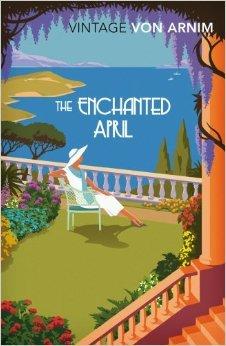
The Enchanted April by Elizabeth von Arnim

An escapist fantasy at its core, The Enchanted April focuses on a group of Englishwomen hailing from differing social backgrounds, who, dissatisfied with their lives, find connection whilst on holiday in the Italian Riviera.

A Tree Grows in Brooklyn by Betty Smith

Betty Smith’s modern classic chronicles the coming-of-age of Francie Nolan, an adolescent girl determined to flourish in early 20th century Brooklyn despite the atmosphere of poverty and hardship she is born into.

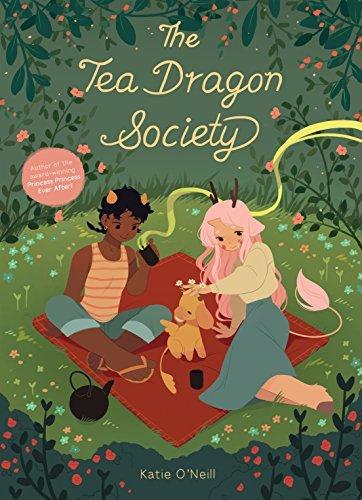
The Tea Dragon Society by Katie O’Neill

Furnished with the sweetest illustrations, The Tea Dragon Society can only be described as a therapeutic reading experience. The former webcomic unfolds in a fairytale realm as Greta, a blacksmith-in-training, learns the art of nurturing tea dragons, from which tea leaves are harvested.

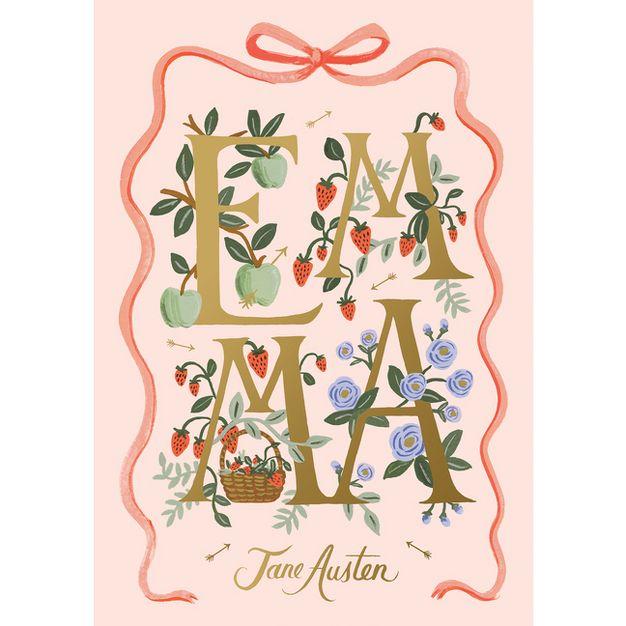
Emma by Jane Austen

Emma - (Puffin in Bloom) by  Jane Austen (Hardcover), 1 of 2

This classic of English literature follows Emma Woodhouse, a charming, wealthy young woman who creates more trouble than good when she decides to play matchmaker for the residents of her country village. Romance, wit, and quaint scenery combine to make Jane Austen’s Emma a springtime essential.

All the Honey by Rosemerry Wahtola Trommer

A recent release from poet Rosemary Wahtola Trommer, All the Honey shepherds readers through moments in time both big and small, beautiful and ugly, on a journey toward emotional healing.

Garden Spells by Sarah Addison Allen

Sarah Addison Allen’s Garden Spells tells the story of Claire Waverley, a gifted but reclusive chef who spends her days tending her family’s enchanted garden. Set in a small town in North Carolina, this magical realist tale of sisterhood and self-growth is perfect for fans of Practical Magic.

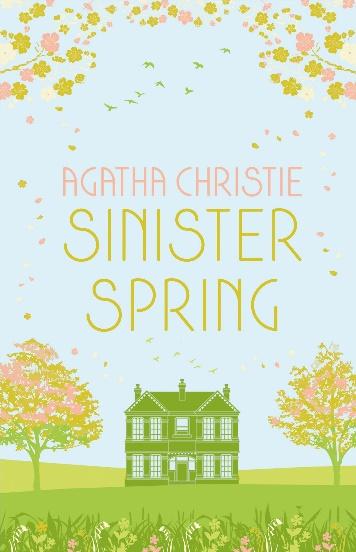
Sinister Spring by Agatha Christie

Agatha Christie’s Sinister Spring is a sweet treat for mystery lovers. This anthology of short stories sets murder and mayhem against a blossoming backdrop with appearances from fan-favorite detectives, Hercule Poirot and Miss Marple.

The Book of Delights by Ross Gay

From the poetic mind of Ross Gay comes a vitalizing collection of essays that doubles as a love letter to life itself. The Book of Delights is a close study of the simple and ordinary, devoted to finding the softness in a world that is too often unkind.